

In this Article
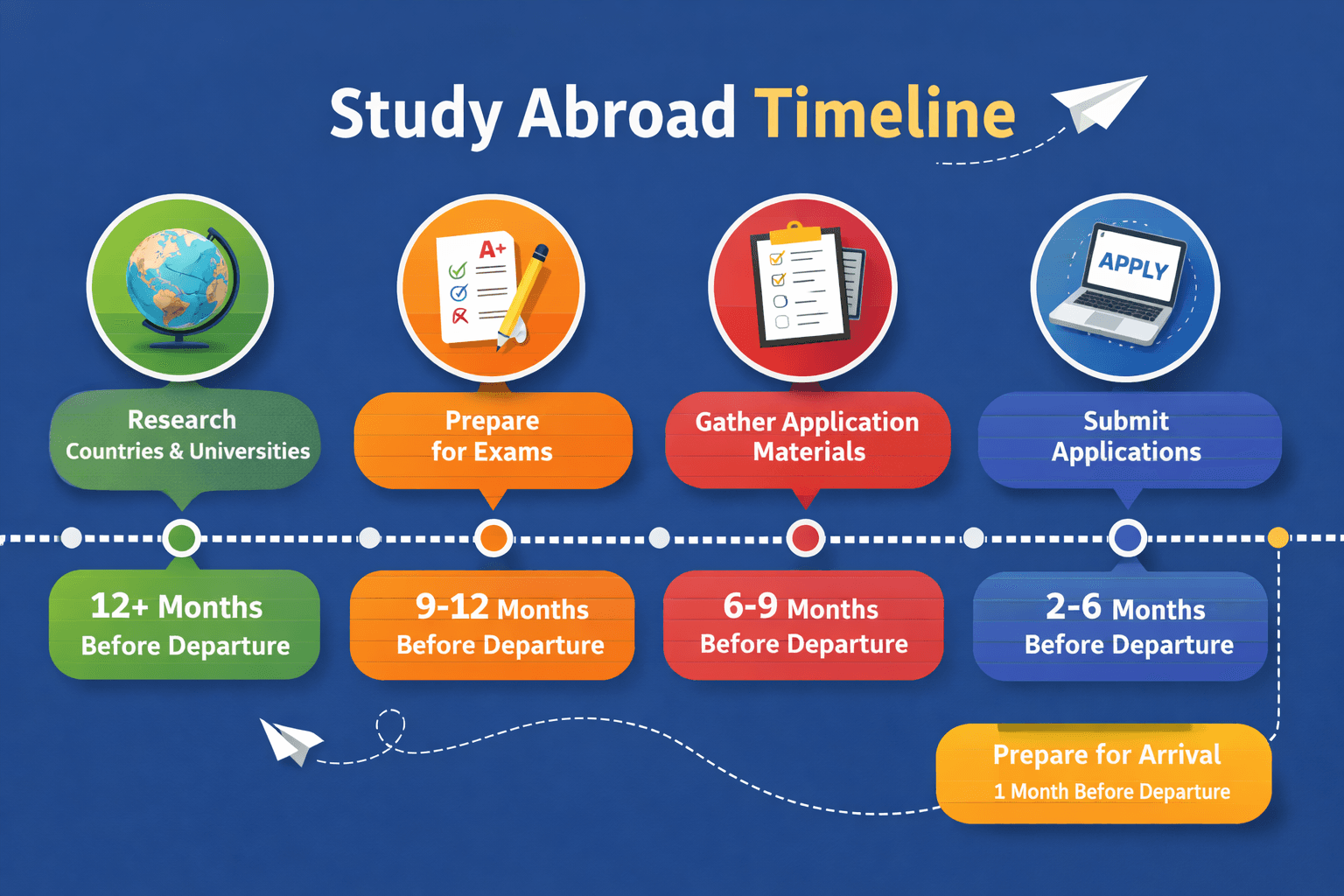
Studying abroad requires careful planning and preparation. Many students miss important deadlines because they start the process too late. From selecting universities to securing a student visa, every step requires time.
Creating a proper study abroad application timeline can help students stay organized and avoid last-minute stress. In this guide, we explain the ideal timeline for international students planning to study abroad.
12–15 Months Before Intake: Research and Planning
The first step in your study abroad journey is research. Students should start planning at least one year before their intended intake.
During this stage you should:
- Decide your preferred study destination
- Research universities and courses
- Check admission requirements
- Review tuition fees and living costs
- Explore scholarship opportunities
Early research helps you shortlist the best universities that match your academic background and career goals.
10–12 Months Before Intake: Prepare for Language Tests
Most universities require proof of English proficiency. Students should prepare and take tests such as:
- IELTS
- TOEFL
- PTE Academic
If you plan to study in Germany or other European countries, you may also need to check language requirements for specific programs.
Preparing early gives you enough time to retake the exam if necessary.
8–10 Months Before Intake: Shortlist Universities
Once your test preparation begins, the next step is finalizing your university list.
Students should shortlist 5–8 universities based on:
- Course curriculum
- University ranking
- Location
- Tuition fees
- Internship opportunities
Make sure to include a mix of safe, moderate, and ambitious universities.
6–8 Months Before Intake: Prepare Application Documents
Universities require several documents during the application process. These typically include:
- Academic transcripts
- Statement of Purpose (SOP)
- Letters of Recommendation (LOR)
- Resume or CV
- English test scores
- Passport copy
Preparing these documents early ensures that your application is complete and strong.
4–6 Months Before Intake: Submit Applications
Most universities have application deadlines several months before the intake. Students should apply as early as possible to increase their chances of admission.
Benefits of early applications include:
- Higher admission chances
- More scholarship opportunities
- Faster admission decisions
Always double-check the university deadline before submitting your application.
3–4 Months Before Intake: Receive Offer Letters
After reviewing your application, universities may issue:
- Conditional offer letter
- Unconditional offer letter
Once you receive the offer, you may need to:
- Accept the offer
- Pay the deposit fee
- Apply for accommodation
This step confirms your seat at the university.
2–3 Months Before Intake: Apply for Student Visa
After confirming your admission, you should begin the student visa process. Visa requirements vary by country but generally include:
- Offer letter from university
- Proof of financial support
- Passport
- Visa application form
- Health insurance
Starting early ensures enough time to handle visa processing and interviews.
1 Month Before Departure: Final Preparation
Before leaving for your destination country, complete the final steps:
- Book flight tickets
- Arrange accommodation
- Attend university orientation
- Pack necessary documents
- Understand local transportation and banking
This preparation will help you settle smoothly in your new country.
Common Mistakes Students Should Avoid
Many students delay the process and face difficulties later. Some common mistakes include:
- Starting applications too late
- Not checking university deadlines
- Submitting incomplete documents
- Ignoring scholarship opportunities
Proper planning can prevent these issues.
Final Thoughts
Studying abroad is an exciting opportunity, but success depends on timely planning and preparation. Following a structured application timeline allows students to manage each step efficiently without unnecessary stress.
Starting early gives you more options, better preparation, and higher chances of admission to your preferred university.
Explore More Opportunities

Written By
Ketan Prajapati
Ketan Prajapati leverages his Master of Business Administration from the University of Glasgow to provide high-level strategic analysis and professional guidance. His approach combines global academic standards with practical, results-driven expertise.